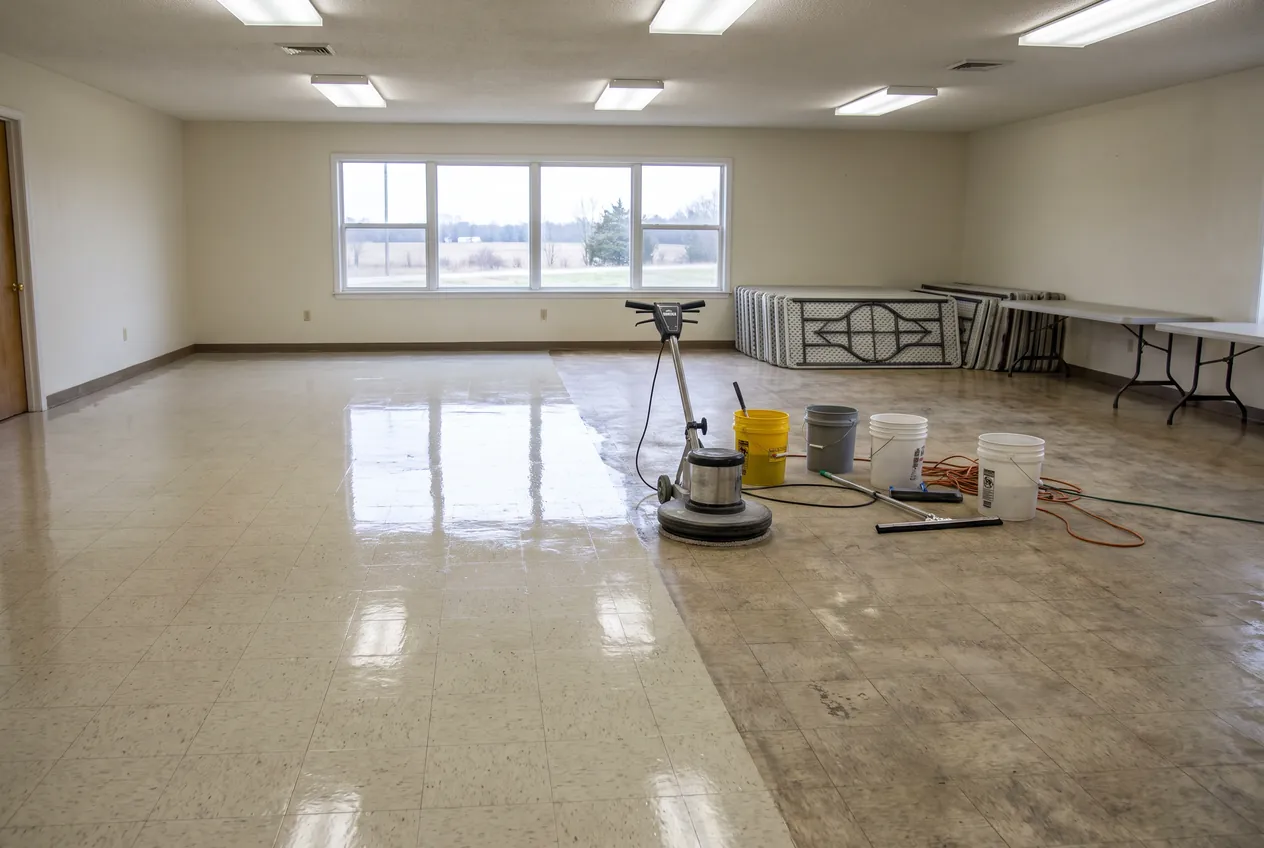
What strip and wax actually means
The floor most often stripped and waxed in commercial buildings is VCT, the vinyl composition tile you see in hallways, breakrooms, clinics and classrooms. The word wax is a holdover. Today the protective layer is almost always an acrylic floor finish, a liquid that dries into a hard, clear coat that takes the scuffs instead of the tile.
Over time that finish wears thin in walkways, traps dirt between layers and starts to yellow or look patchy. Stripping chemically removes all of it down to bare tile so fresh coats go on a clean base. It's the most labor-heavy floor job in a building, which is why it's worth doing right and not too often.
The steps, in order
Each step depends on the one before it. Skipping the rinse or rushing the drying time is the most common reason a new finish peels, looks cloudy or wears through in a few weeks. Here's how a careful crew works through a room.
- Move furniture, bins and anything on the floor out of the room
- Dust mop to pick up grit and loose debris
- Set out wet floor signs and close off the area
- Apply stripper and let it dwell for the time on the label
- Scrub with a low-speed floor machine and stripping pad
- Pick up the slurry with a wet vacuum
- Rinse, often twice, and apply a neutralizer
- Let the bare floor dry completely
- Apply thin coats of finish, often three to five, drying between coats
- Return furniture once the finish has cured enough for use
Full strip, scrub and recoat, or burnish
A full strip isn't the only option, and doing it more than needed just wears down the tile and costs labor. Many floors get through the year with lighter jobs in between, saving the full strip for when the finish is too worn or dirty to recover. Here's how the three jobs compare.
| Job | What it does | Typical timing |
|---|---|---|
| Full strip and refinish | Removes all finish down to bare tile, then lays new coats | Often once or twice a year, depending on traffic |
| Scrub and recoat | Scrubs off the dirty top layer and adds a fresh coat or two | Between full strips, when walkways look dull |
| Burnish | A high-speed machine polishes the finish to bring back shine | Optional, after the finish cures and as part of upkeep |
| Daily dust mop and damp mop | Keeps grit from scratching the finish | Every cleaning visit |
Floors that should not be stripped
Not every resilient floor is VCT. Many luxury vinyl tile and plank products and other no-wax floors come with a factory wear layer, and their makers say not to strip them or apply finish. Running a stripping pad and chemicals over them can dull or damage the surface and void the warranty.
Before you book anything, find out what the floor actually is. Check the original flooring paperwork, ask the building owner, or have the provider look at it during the walk-through. If you can't confirm the product, follow the floor maker's care guidance rather than a general rule, and ask the crew to test a small, out-of-the-way spot first.
Planning the work in a building that stays open
Stripping produces wet, slippery floors and chemical smells, and fresh finish needs time to dry between coats. That's why the job almost always happens after hours or over a weekend. The area has to stay closed until the last coat is dry, and good ventilation helps both the drying and anyone working nearby.
On your side, clear desks and personal items off the floor ahead of time, tell staff which rooms will be closed and when, and make sure the crew has access, power and water. In larger buildings, many managers split the work into zones over several nights so hallways and restrooms stay usable.
Floor care in Little Rock buildings
A lot of Little Rock's building stock runs on VCT: state agency offices, school hallways and the clinics and medical offices that make the city the healthcare center of Arkansas. Those floors take steady traffic all day, and red clay mud from spring storms grinds grit into the finish at every entrance, so walkways near the doors usually wear through first.
The hot, humid summers matter for scheduling. Damp, muggy air slows how fast finish dries, so give the crew enough hours overnight or over a weekend to let each coat set. Schools and offices from North Little Rock to Conway often line the work up with quieter weeks when fewer people need the halls.
What shapes a strip and wax quote
Floor work is often quoted by the square foot, but the rate moves with conditions. A floor with years of built-up finish takes longer to strip than one done last year. Lots of furniture to move, small rooms with tight corners, the number of coats you want and whether the crew can only work certain hours all add labor. Ask each company to list the coats, the products and whether furniture moving is included so the quotes line up.